2024
Dot Ai
Dot.ai
Background
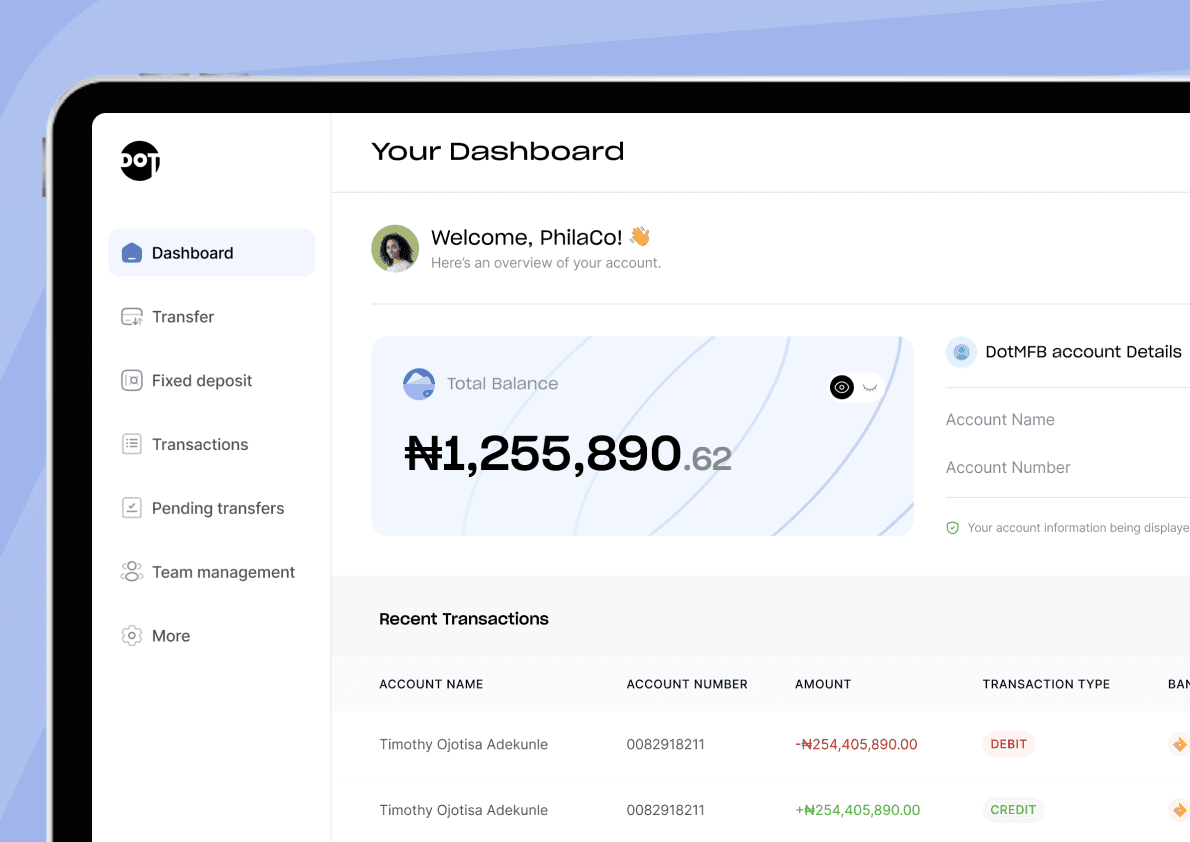
Dot Business Banking is a digital platform tailored for small to medium-sized enterprises (SMEs), providing essential financial services to help streamline business operations. It offers a range of tools for managing finances, facilitating payments, accessing loans, and performing other key banking functions directly from web and mobile applications. Dot's goal is to simplify banking for businesses by combining essential banking needs with a user-friendly, digital experience, enabling users to monitor cash flow, manage transactions, and achieve greater control over their financial activities.
The Challenge: The "Last Mile" of Banking
The Challenge: Dot established itself as a leader in retail digital banking through a philosophy of "one-tap" simplicity. However, as the platform scaled, a significant gap emerged: small-to-medium enterprises (SMEs) were attempting to use retail tools for complex business operations.
The core friction points included:
Security vs. Accessibility: Business owners needed to delegate tasks without relinquishing total control.
Data Density: Transitioning from individual balance tracking to managing high-volume payrolls, vendor payments, and POS terminal reporting.
Legacy Friction: The existing onboarding was a manual, back-office-heavy process that took 3–5 business days, leading to high drop-off rates for time-sensitive business owners.Key Requirements:
Onboarding: Develop streamlined onboarding for business clients, including both back-office and self-enrollment options.
User Management: Enable organizations to add multiple users with customizable permissions and roles.
Transaction Flexibility: Support complex banking activities such as bulk transfers, employee payroll, and vendor payments.
Workflow Management: Allow businesses to create and manage approval workflows, ensuring compliance and security.
POS Integration: Integrate with DotPay to offer POS requests, transaction tracking, and dispute resolution.
Approach & Process
User Research:
We began by interviewing existing business customers to identify their pain points with DotBank’s previous platform. We also conducted surveys and user interviews with potential business clients. Key insights were:
Onboarding: Business clients required a simple yet secure onboarding process, with quick access to key functions.
Account Management: Businesses emphasized the need for streamlined access to account balances, statements, and transaction history.
Multi-User Management: Clients sought a system that allowed flexible role assignments, permissions, and workflow approvals for transactions.
Transaction Tools: Users requested support for both single and bulk transactions with high flexibility in how they handled payroll and vendor payments.Design and Development
We focused on building an interface that delivered both functionality and a sleek, modern look.
Streamlined Navigation: We restructured the navigation to allow users to easily access product features and case studies.
Visual Hierarchy: By introducing a clear typography system, we ensured that complex data was presented in a digestible manner.
Responsive Design: A mobile-first approach was implemented, ensuring seamless user experience across all devices.
Consistent Brand Aesthetic: We integrated NexaTech's new branding into the web design, using a cohesive color palette, custom icons, and dynamic illustrations.
Key Features
User-centric navigation
Optimized mobile experience
Enhanced data visualization
Clean, minimalistic design with custom elements
The "Maker-Checker" Conflict
One of the most complex flows I designed was the Multi-Level Approval Workflow.
The Initial Approach: We first prototyped a flat notification system where any "Admin" could approve a transfer.
The Failure: User testing with larger corporate clients revealed a "Trust Gap." For high-value transactions (₦5M+), owners required a "Maker-Checker" system (one person initiates, another authorizes).
The Design Pivot: I introduced "Positive Friction." Instead of making approvals instant, I designed a mandatory "Review & Verification" modal. This forced a comparison between the current account balance and the total impact of the transfer before the final biometric/PIN authorization.
Edge Case Resolution: I accounted for the "Stale Approval" scenario. If an admin initiates a transfer at 10 AM, but the approver only opens the app at 4 PM when funds are no longer sufficient, the UI triggers a real-time validation state that voids the pending request and explains the deficit, preventing failed ledger entries.
Persona Development:
Based on the research, we identified three core personas:
Persona 1: SME Owner
Characteristics: Small business owners with limited staff.
Pain Points: Difficulty managing payroll and vendor payments on tight budgets.
Solution: DotBank’s simplified onboarding, low fees, and bulk transfer options address their need for efficiency and cost-effectiveness.
Persona 2: Large Corporate Client
Characteristics: Larger enterprises needing advanced banking features.
Pain Points: High transaction volume, complex workflows, and multi-user management.
Solution: DotBank’s multi-user management, workflow approvals, and comprehensive reporting tools support complex organizational structures.
Persona 3: Freelancer/Consultant
Characteristics: Individuals or small teams offering cross-border services.
Pain Points: Cross-border payments and currency conversion.
Solution: DotBank’s multi-currency support and simple transfer processes provide convenient, cost-effective options for international transactions.
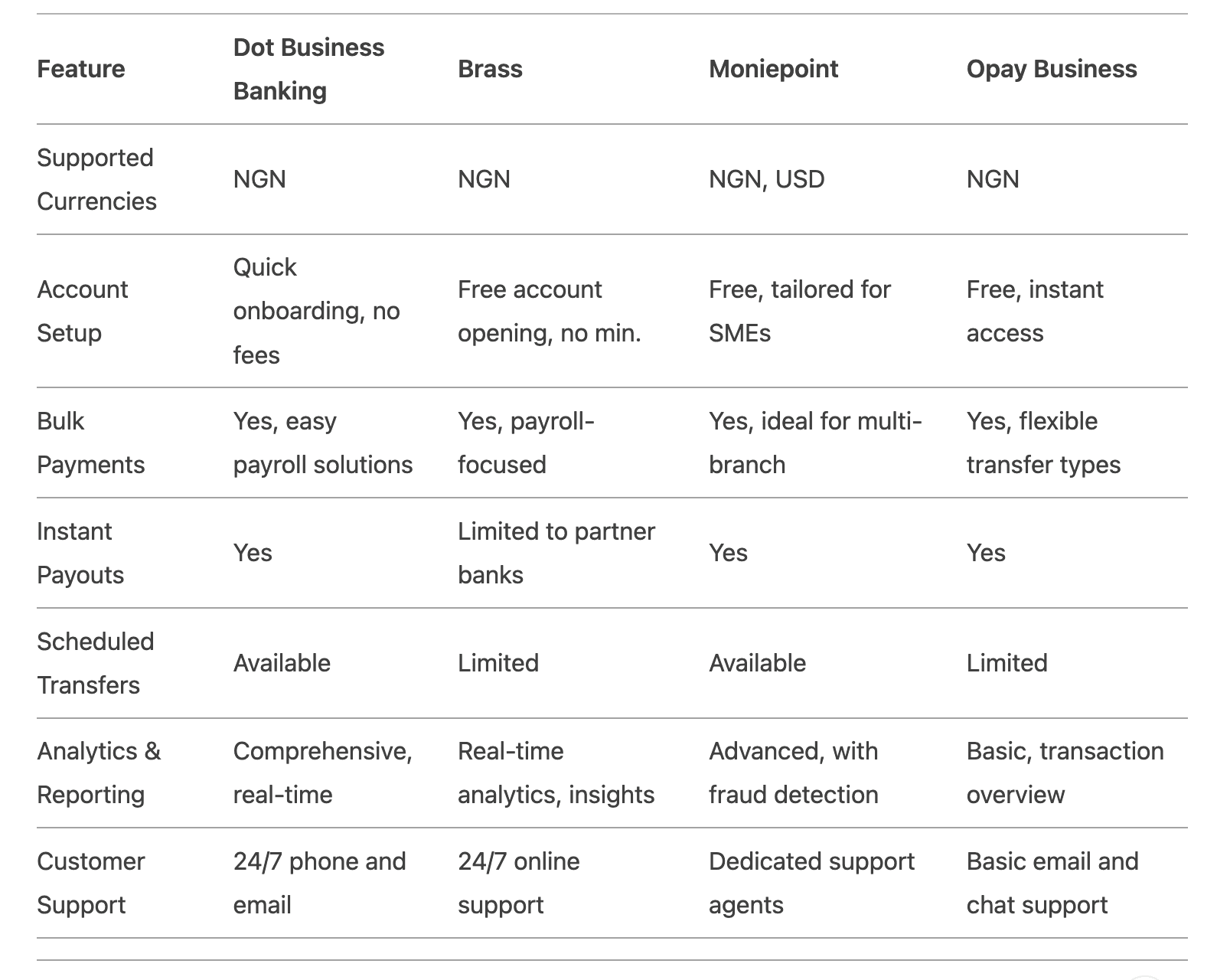
Competitive Analysis:
We analyzed similar platforms (e.g., Brass, Moniepoint, and Opay Business) to identify key differentiators in feature sets, user experience, and customer support. Key findings included:
UI Design: Ensuring professional and user-friendly design choices.
Feature Sets: Identifying essential functionalities like user management, transaction flexibility, and workflows.
Market Needs: Understanding specific features that would give DotBank a competitive advantage, like integrated POS services and comprehensive reporting.
Onboarding Experience:
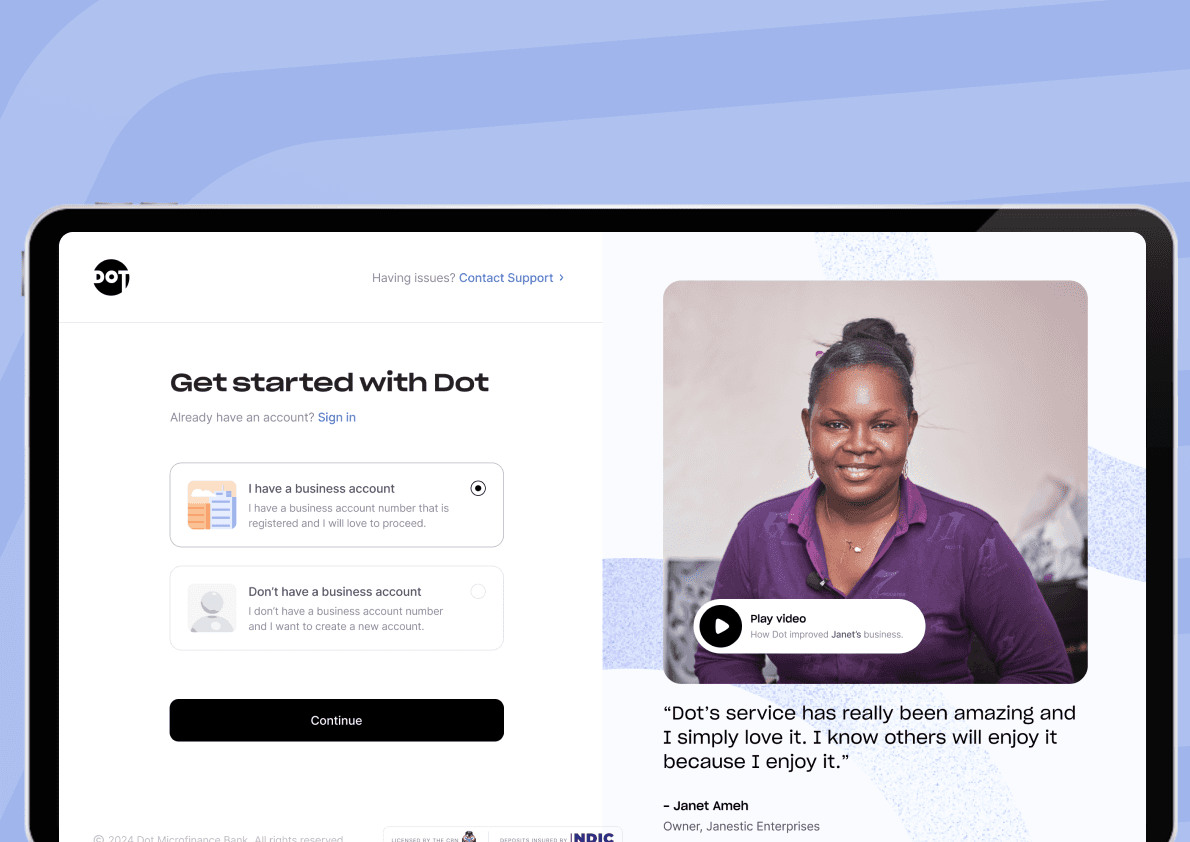
The onboarding flow was designed with both back-office support and a self-enrollment option. Steps included:
Account verification using OTP for security.
Setting up a user profile, including username, password, and transaction PIN.
Simplifying terms and conditions acceptance to minimize the setup time while ensuring compliance.
Dashboard Layout:
Designed an intuitive dashboard that displays essential account information at a glance:
Accounts Overview: A clear view of all account balances with a breakdown by currency.
Transaction Summary: Table showing recent transactions, both bulk and single transactions
Multi-User Management:
Designed a user management system allowing businesses to add and assign roles to team members. Key features included:
Role-based permissions for secure access control.
Workflow setups that allow managers to approve or decline transactions, with detailed logs for accountability.
Transaction Management:
Multiple transaction options were incorporated:
Single Transfers: Enabled seamless transfers with real-time name verification and secure PIN authorization.
Bulk Transfers: Provided options for CSV uploads or manual entry, supporting both payroll and vendor payments.
Employee and Vendor Payments: Added structured options for employee payments, with scheduled dates and recurring transfers.
Solution Design and Features
Self-Onboarding: A simplified onboarding experience that allows businesses to register independently and start using the platform immediately.
Comprehensive Dashboard: Displays all account balances, transaction summaries, and management tools in one place.
User and Workflow Management: Allows businesses to manage internal roles, permissions, and multi-level approval processes, enhancing internal control.
Payment Flexibility: Single and bulk transfers for payroll and vendor payments, including file upload options for seamless entry.
POS and Reporting: Integrated DotPay for POS requests and real-time transaction reporting, along with options to track and resolve disputes.
Design Challenges and Solutions
Complexity of Multi-User Setup
Solution: Created a robust, intuitive role management system that enables businesses to assign permissions without excessive training.
Requirement for Data Accuracy
Solution: Implemented extensive user testing and data synchronization processes across DotBank’s services to ensure accuracy.
Integration with DotPay and Core Banking Services
Solution: Collaborated closely with engineering teams to align back-end services, achieving seamless integration and data flow.
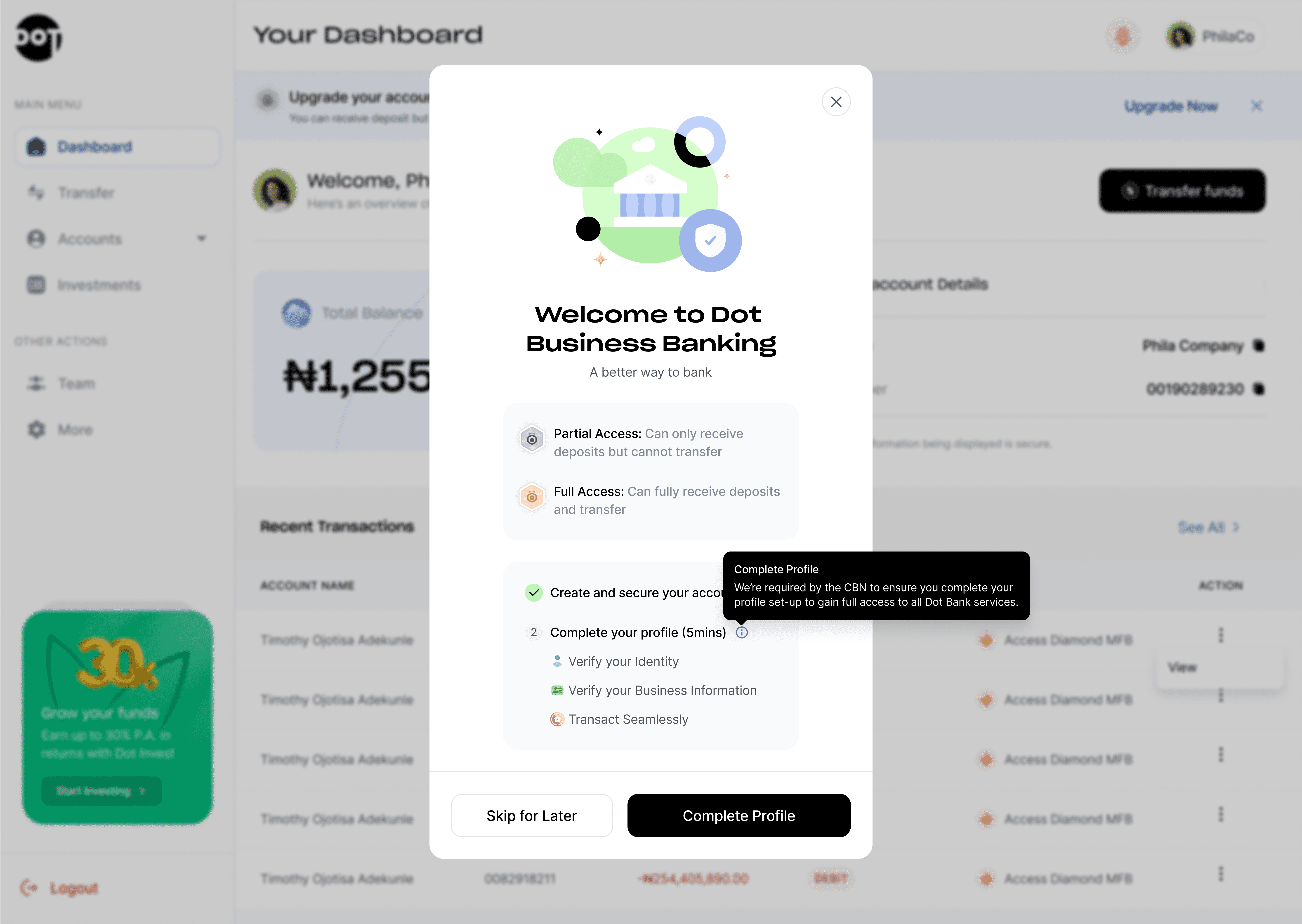
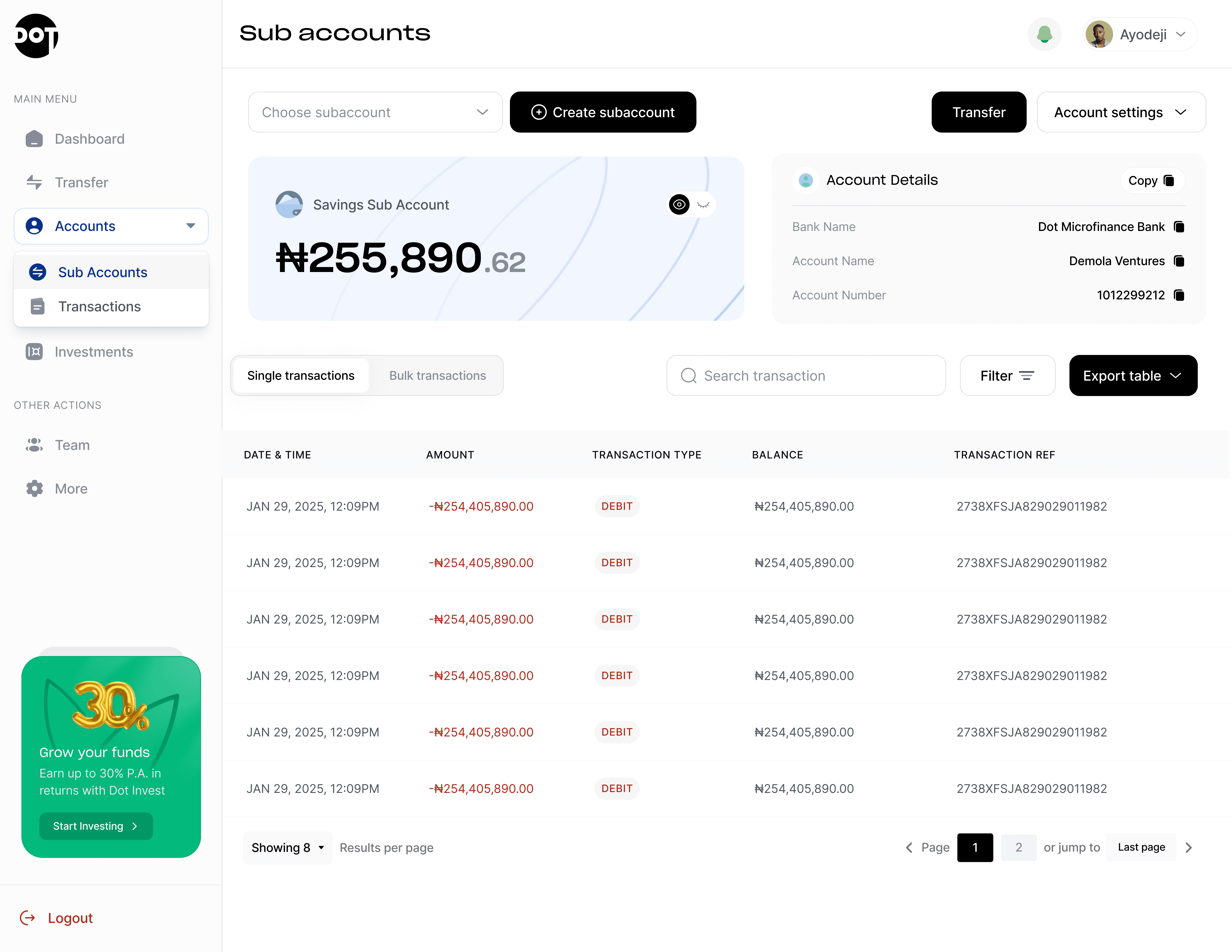
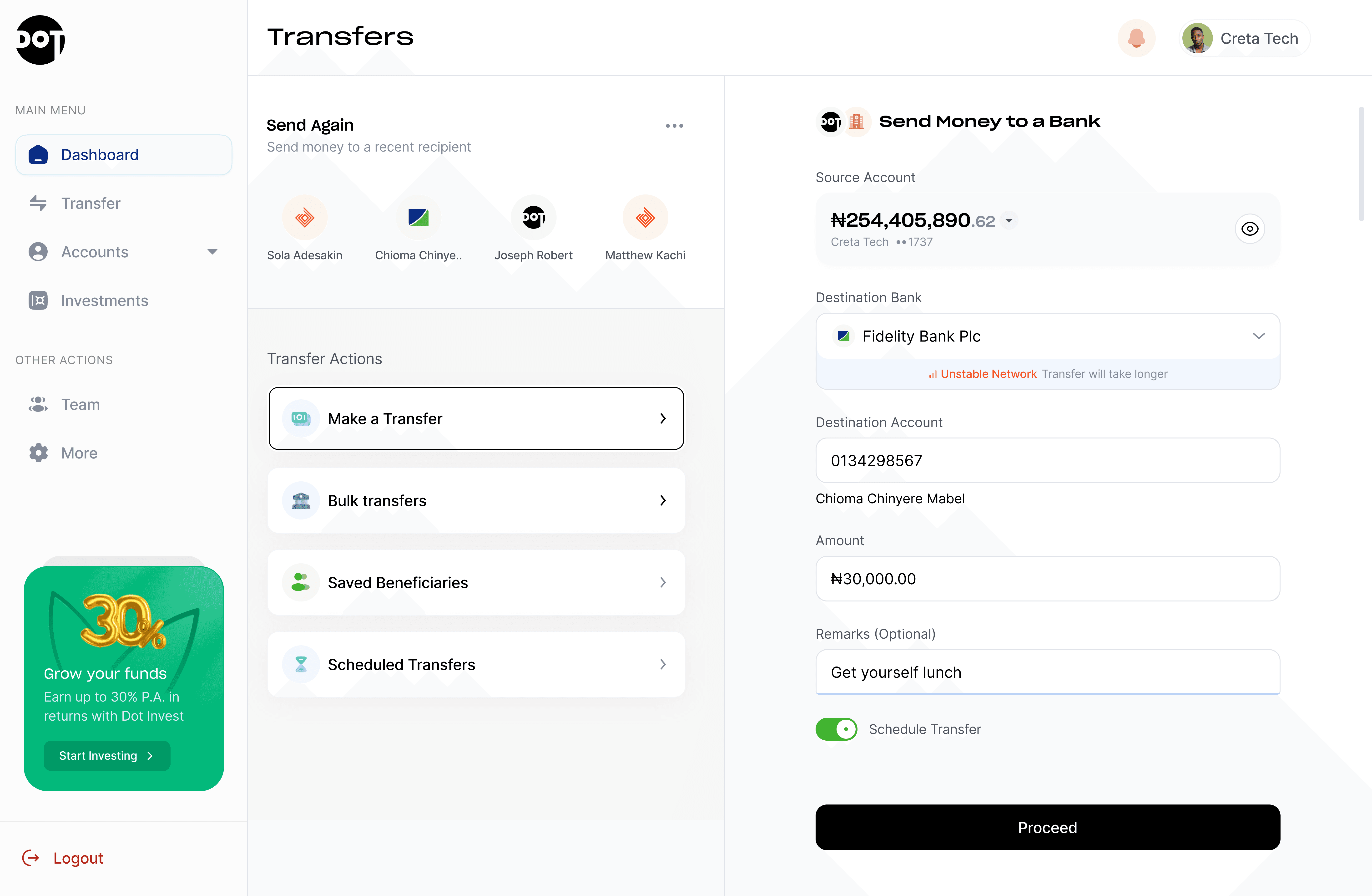
UI & Interaction: High-Contrast Precision
Success Metrics Achieved
Business users can perform comprehensive banking activities within DotBank, from account management to payroll and vendor payments.
Scalability
The platform was designed to support a high volume of business accounts and transactions, positioning DotBank to scale across different business types and industries.
Increased Engagement
Positive user feedback indicated high satisfaction with the new features and streamlined workflows. The approval process, in particular, allowed businesses to secure transactions with minimal disruption.
Conclusion and Next Steps
The Dot business banking platform achieved its goal of providing an intuitive, feature-rich solution tailored to the unique needs of business clients. The platform has been well-received and has enabled DotMFB to serve more non-retail customers.
I served as the Lead Product Designer, responsible for the end-to-end design of the Multi-User Management system, POS Integration, and the Self-Enrollment flow.
Market Growth: Successfully onboarded 634,000+ businesses within the first 8 months of launch.
Onboarding Optimization: Increased the onboarding completion rate to 87%. By integrating real-time OCR for document verification, we reduced "Time-to-First-Transaction" from 72 hours to 15 minutes.
Scalability: Designed the platform to support a massive volume of concurrent transactions, positioning Dot to dominate the SME sector in the region.